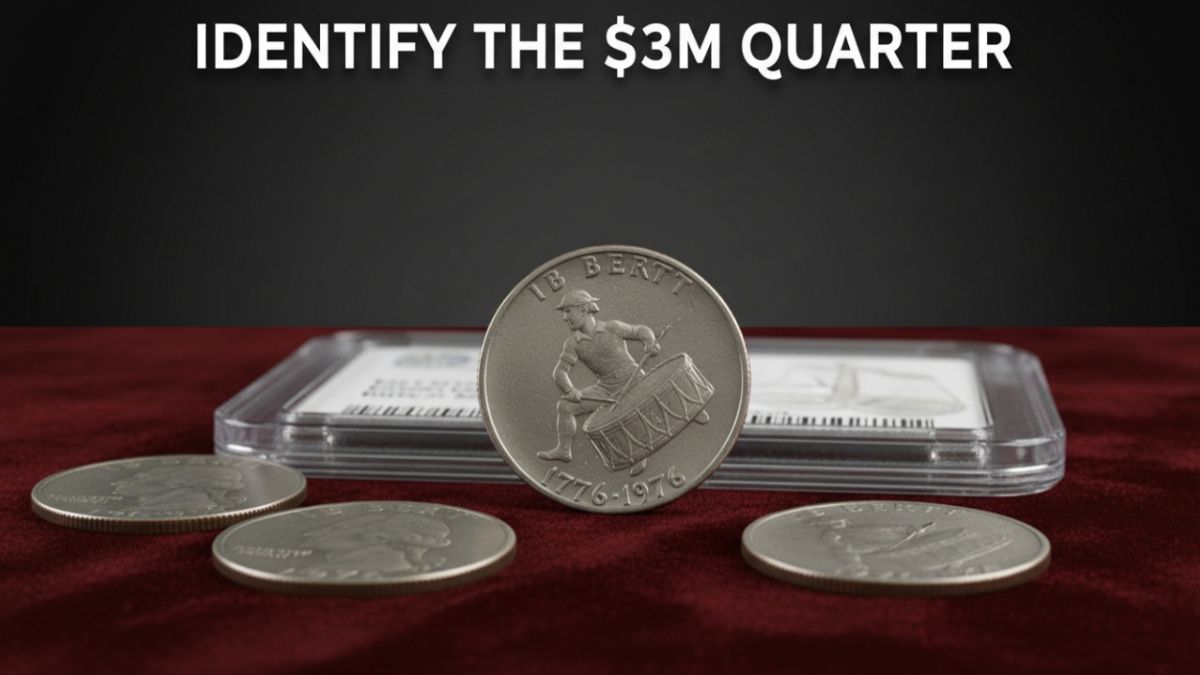

1976 Bicentennial Quarter: The 1976 Bicentennial Quarter is considered a highly special and prestigious coin in American history. It was issued specifically to commemorate the 200th anniversary of American independence. While most quarters from this year are common coins worth only 25 cents, some rare versions have fetched prices as high as $3 million when certified. The high value of these exceptional coins is due to their unique minting errors, unusual metal compositions, and exceptional strike quality, which are unknown to most casual collectors.
Because of its historical significance and potentially life-changing value, the Bicentennial Quarter remains one of the most sought-after collectible coins among American numismatists today.
Table of Contents
Key Features
The 1976 Bicentennial Quarter has several rare varieties that set it apart from other coins and make it extremely valuable.
- Some rare versions have been auctioned for millions of dollars.
- Minting errors and special experimental planchets increase the rarity of certain coins.
- Silver-clad versions are considered more desirable.
- Deep cameo proof coins are highly valuable.
- Double-die errors enhance collector interest.
- High-grade certified coins can sell for six-figure sums.
- Most quarters are common, but the prices of rare versions have astonished collectors.
Design and Historical Significance
This coin was issued to celebrate America’s 200th anniversary, and its unique design sets it apart from all other quarter coins.
Key Design Features:
- Dual Date: 1776-1976.
- Reverse Design: An image of a drummer boy created by Jack L. Ahr.
- Independence-Inspired Appearance: A colonial military theme.
- 13 Victorious Stars: Representing the original 13 colonies.
- Obverse Design: A stylized torch and Liberty motif.
This unique design was produced for just one year, thereby, making it even more of a landmark.
How to Identify a $3 Million Quarter
Not more than a handful of the 1976 Bicentennial Quarters have the features that make them highly valuable. Collectors should find the following:
- Presence of a silver planchet, instead of copper-nickel.
- Sharp strike details, without any wear.
- Unusual mintmarks or rare punch variations.
- Unusual metal color or toning.
- Misalignment or double-strike effects.
- Off-center or clipped planchet errors.
If your coin matches any of these attributes, expert grading is essential.
Mintmarks and Significance
The coin’s minting location also plays a significant role in its rarity and valuation.
Main Mintmark Classifications:
- No mintmark (Philadelphia) — widely circulated, some rare varieties.
- D mintmark (Denver) — potential for striking errors.
- S mintmark (San Francisco) — proof and silver strike production.
The rarest multi-million dollar quarters are associated with special strikes or experimental planchets.
Silver vs. Clad Composition
The 1976 quarters were minted in two types of metal composition. Understanding their differences immediately impacts valuation.
- The silver strike version contains 40% silver.
- The common circulating version is copper-nickel clad.
- Silver coins have a brighter edge and a heavier weight.
- Proof silver strikes often have a mirror-finish surface.
Silver Bicentennial Quarters are collectible, but flawed silver versions can fetch millions.
Rare Error Varieties
The most valuable 1976 quarters typically command high prices due to unintentional errors during production.
Key High-Value Errors:
- Double-die obverse or reverse doubling. Clipped planchets at the edges.
- More than 15% off-center strikes.
- Strikes on incorrect silver planchets.
- Wrong metal composition errors.
- These errors transform a common 25-cent coin into a high-value rarity.
Grading and Condition
The better the coin’s condition, the higher the value. Certification is often necessary for million-dollar valuations.
- MS65 or higher grade — for premium appreciation.
- Deep cameo proof versions are more desirable.
- Mirror-finish clarity further enhances value.
- Slabs certified by major grading companies increase value.
Multi-million dollar valuations are possible only for perfect, error-free examples.
Where to Get a Valuation
If you suspect you have a rare Bicentennial Quarter, professional grading is essential.
Collectors typically choose the following companies:
- PCGS
- NGC
- ANACS
- ICG
These companies authenticate, grade, and certify the value of coins, which is crucial for high-value auction sales.
Estimated Value Range
Prices vary significantly depending on rarity, metal composition, and condition.
- Common circulating coins: 25 cents to a few dollars.
- Silver proofs: $50 to hundreds of dollars.
- High-grade deep cameo proofs: $1,000+.
- Certified error strikes: Thousands to millions of dollars.
- Ultra-rare unique types: Up to $3 million.
A perfect find could change any collector’s life.
Final Conclusion
The 1976 Bicentennial Quarter is one of the most iconic and exciting coins in American history. While most common quarters are only worth 25 cents, some rare coins with errors can be worth millions. These coins possess features such as imperfections, silver strike, or high-grade proof finishes, which drive their value into the six- or seven-figure range. The estimated prices for the rarest and most authenticated versions have reached close to $3 million, making this one of the most exciting and significant collectibles in the history of American coin collecting.
FAQs
Q. What is the 1976 Bicentennial Quarter?
A. It’s a U.S. quarter released to celebrate 200 years of American independence, featuring a unique dual-date (1776-1976) design.
Q. Are all 1976 quarters valuable?
A. No, most are common and worth 25 cents, but rare varieties with errors or silver composition can be worth thousands to millions.
Q. How can I identify a high-value quarter?
A. Look for silver planchets, sharp strike details, missing or rare mintmarks, unusual metal tones, off-center strikes, or double-die errors.