

CalWORKs December 2025 Payment: is one of the most important topics for families, caretakers, and support advocates in California as the end of the year approaches. If you’re counting on this benefit for holiday bills, rent, utilities, groceries, or planning for the new year, it’s vital to know exactly when the cash aid will arrive, how much you can expect, who qualifies, and how to make the most of the program. This article breaks it all down clearly and accurately, using official sources and practical guidance so readers of all ages can understand it. Everything in this article is grounded in official policy and trustworthy information, based on guidance from the California Department of Social Services (CDSS), county welfare systems, and research reports from credible organizations.
Table of Contents
CalWorks December 2025 Payment
CalWORKs December 2025 Payment: Check Payment Amount, Eligibility & Dates is more than just a phrase — it’s essential information that affects real families’ financial stability. Knowing when your benefits arrive, how they are calculated, what rules you must follow, and how to access support services gives you confidence and control over your financial planning. Stay informed, follow reporting requirements, meet work expectations, and take advantage of supportive services — because CalWORKs is not just a program, it’s a bridge to stability and opportunity.

| Topic | Key Facts & Data |
|---|---|
| Program Name | CalWORKs — Cash assistance for low‑income families with children. Official site: https://www.cdss.ca.gov/calworks |
| December 2025 Payment Window | Payments will be loaded Dec 1 – Dec 3, 2025 directly onto EBT cards. |
| Average Monthly Aid | Rough statewide average: about $1,000 / month depending on family size and income. |
| Deposit Method | Funds are placed automatically on your EBT debit card. |
| Work & Training Requirements | Most adults must participate in work‑related activities 20‑35 hours per week unless exempt. |
| Time Limits | Aid is generally limited to 60 months (5 years) over a lifetime. |
| Other Support Services | Childcare support, transportation aid, employment training, and referral services. |
What Is CalWORKs and Why It Matters?
CalWORKs stands for California Work Opportunity and Responsibility to Kids. It’s California’s version of a federal program called Temporary Assistance for Needy Families (TANF), with a focus on helping families with children who are struggling financially. The purpose of CalWORKs is not just to provide cash, but to help families achieve stability and long‑term self‑sufficiency.
In practical terms:
- CalWORKs provides monthly cash aid to help with everyday needs like rent, utilities, clothing, and food.
- The program also offers support services such as childcare assistance, job training, job search support, and education resources.
- Recipients participate in work‑related activities (called Welfare‑to‑Work) unless they have an exemption.
This program is especially crucial around the end of the year because many families face higher expenses due to holidays, colder weather, and annual bills that come due in December and January.
When Are CalWorks December 2025 Payment Scheduled?
For December 2025, CalWORKs cash benefits will be deposited onto eligible recipients’ Electronic Benefit Transfer (EBT) cards during the first few days of the month:
Payment Window:
December 1 – December 3, 2025
These deposits are automatic — you do not receive a paper check. Instead, your EBT card is loaded once the county system processes your case for the month. Most people will see their funds show up early in the morning on one of those dates.
Knowing these dates helps families plan bill payments, avoid late fees, and budget household expenses. Since utilities, rent, and groceries cost money every month, having reliable timing helps families keep stable.
How Much Money Will CalWORKs Provide in December 2025?
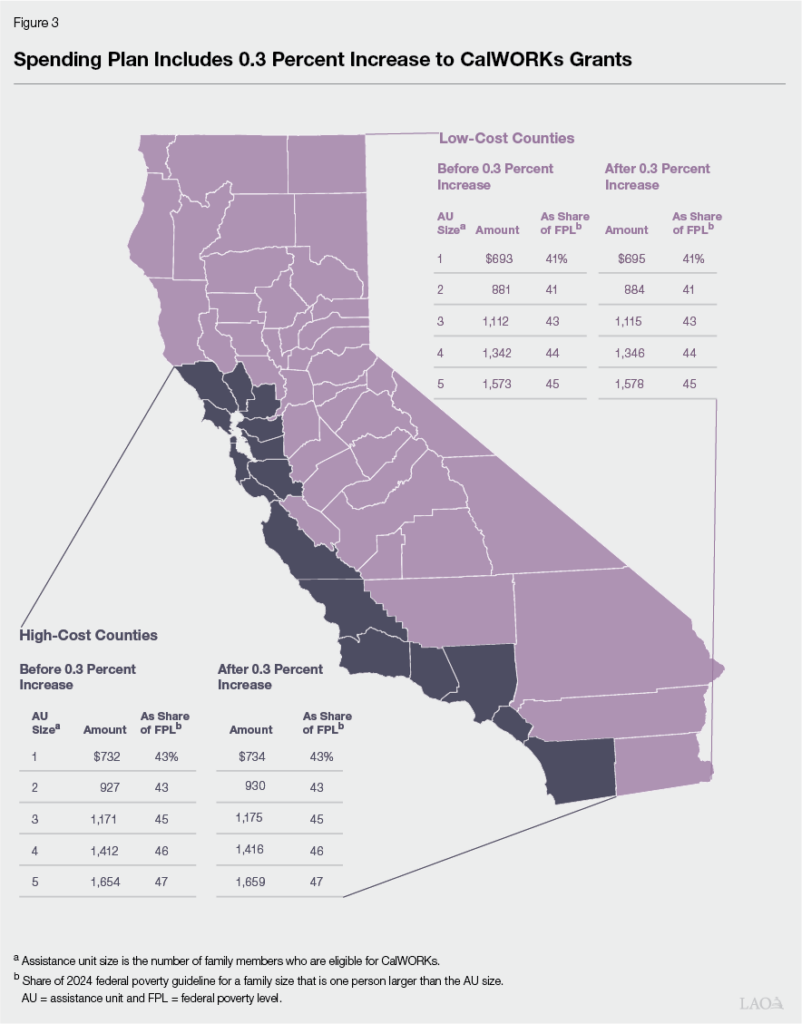
CalWORKs payments are based on a combination of factors — family size, income, household resources, and county standards.
There is no single fixed amount that every family receives. Instead, the state publishes a Maximum Aid Payment (MAP) schedule that sets the maximum possible monthly aid based on the number of people in a family. Then your actual income and other supports are subtracted to determine your monthly amount.
As a broad example:
- Recent statewide data shows an approximate average CalWORKs benefit of around $1,000 per month though actual household amounts may be higher or lower.
- A family with more members generally has a higher MAP, but if they have earned income, that income reduces the cash amount they receive.
Thus, a family of four might be eligible for a larger maximum amount than a single parent with one child, but both families’ actual benefits depend on their combined income and circumstances..
Who Is Eligible? Simple Eligibility Rules
CalWORKs eligibility is based on a set of standards that include:
- Residency: You must live in California.
- Household Composition: At least one child under age 19 must be in the home, or you must be pregnant.
- Income Tests: Your family’s income must fall below the program’s eligibility limits after allowable deductions are applied.
- Resource Limits: There are limits on assets (like savings and property) that count toward eligibility.
- Participation Requirements: Able‑bodied adults generally participate in work or training programs unless they qualify for an exemption.
- There are also special rules for non‑citizen households — some non‑citizens who meet specific criteria can still receive assistance for their U.S.‑citizen children.
The goal of eligibility rules is to ensure support goes to families that truly need temporary help while encouraging movement toward stability.
Work Requirements: Welfare‑to‑Work (WTW)
Most adults receiving CalWORKs must participate in Welfare‑to‑Work (WTW) activities. These are programs designed to improve employability and help parents or guardians transition into stable employment.
Typical WTW requirements include:
- Job search activities
- Job training or education
- Work experience programs
- Community service programs
Counties usually require:
- 20 hours per week of WTW activities for single parents with a child under age 6.
- 30 hours per week for other single parents.
- 35 hours per week for two‑parent families.
There are exemptions for individuals who are disabled and unable to work, are caring for a very young child, or meet other qualifying exceptions. Your county caseworker determines your status and which program fits your goals and situation.
WTW participation is not punishment — it’s a structured way the program supports recipients in building skills, finding employment, and becoming financially stable.
Time Limits: How Long You Can Receive CalWorks December 2025 Payment
CalWORKs cash aid is time‑limited. Typically, a family can receive cash aid for up to 60 months (five years) over their lifetime. This lifetime limit includes cumulative months on the program and does not necessarily need to be five years in a row.
This five‑year cap is intended to help families move toward self‑sufficiency — but the clock pauses (“beyond time limit status”) for certain exemptions like incapacity to work or caring for dependent children with severe health issues.
Because of this, it is important to understand how your months are counted, and whether any exemptions may apply. Your county welfare office can help you track this.
How CalWORKs Relates to Other Programs?
Many families receive CalWORKs alongside other supports, and it’s important to know how these systems work together.
CalFresh (Food Benefits)
CalFresh is California’s name for the federal Supplemental Nutrition Assistance Program (SNAP), often referred to as “food stamps.” CalFresh provides a separate monthly benefit used for groceries.
- CalFresh benefits are deposited Dec 1 – Dec 10, 2025, based on your case number’s last digit.
- These benefits go on the same EBT card you use for CalWORKs cash, but they are separate funds used only for food.
Receiving CalWORKs does not guarantee CalFresh, and vice versa — but many families are eligible for both at the same time.
Medi‑Cal (Health Coverage)
Medi‑Cal is California’s Medicaid program and provides health coverage for low‑income families, including children, adults, pregnant women, seniors, and people with disabilities.
If you receive CalWORKs, you may also be automatically eligible for Medi‑Cal.
Practical Tips for Managing Your CalWORKs Benefits
Here are several practical, everyday tips you can use to avoid problems and make your benefits last:
1. Report Changes Promptly
Any change in income, household size, address, or phone number needs to be reported without delay. Failure to do this can cause overpayments or suspensions.
2. Keep Paperwork and Deadlines Organized
You may need documents for reviews or recertification — like pay stubs, school records for your children, or medical records. Staying organized means fewer headaches and delays.
3. Know Your Work Requirements
Understanding how many hours and what activities you must participate in will help you avoid sanctions or reductions in benefits.
4. Use Support Services
Childcare help, training programs, and employment services are part of CalWORKs and can make it easier to balance work and family responsibilities.
5. Avoid Sanctions
Missing appointments, not participating in your welfare‑to‑work plan without an approved reason, or failing to comply with reporting requirements can result in partial or full loss of benefits.
Where to Check Benefit Status and CalWorks December 2025 Payment Details
If you want to know the exact amount you are scheduled to receive or confirm that a payment has posted, here’s where you can check:
BenefitsCal.com
The official state portal where you can:
- View payment history
- Check upcoming deposits
- Upload documents
- Find messages from your county caseworker
Your EBT card information will be linked to your account.
EBT Card Phone and Balance Services
Check your balance at any ATM or by calling the number on the back of your EBT card.
County Welfare Office
If anything is unclear — such as your eligibility, work requirements, or case status — your county welfare office is your primary point of contact.
$4,983 IRS Direct Deposit Coming in December 2025; Check Eligibility Facts Before You Claim, Date
$1,000 Stimulus Payment for Seniors – December 2025 Full Payment Schedule