

A targeted guaranteed income initiative is providing $725 monthly payments to selected low-income families with young children as part of the Family First Economic Support Pilot, a local program launched in 2025 to evaluate whether predictable cash assistance can improve household stability.

The program, often referenced in headlines as a “$725 guaranteed income program,” is not a federal benefit and does not apply nationwide. Instead, it represents a controlled, county-level policy experiment aimed at informing future decisions on poverty reduction and family support.
Table of Contents
$725 Guaranteed Income Program
| Key Fact | Detail |
|---|---|
| Monthly Payment | $725 per household |
| Duration | 12 months |
| Participants | ~200 families |
| Eligibility Focus | Parents of children under age five |
| Geographic Scope | Selected Sacramento County ZIP codes |
Understanding the $725 Guaranteed Income Pilot
The Family First Economic Support Pilot (FFESP) was developed by Sacramento County in collaboration with state agencies and community organizations. It reflects a growing interest among local governments in testing unconditional cash transfers as a supplement to traditional social programs.
Under the pilot, eligible families receive $725 each month for one year. The funds come with no restrictions on how they are spent. Participants may use the money for rent, groceries, utilities, childcare, transportation, or debt repayment.
County officials describe the program as a research-driven initiative rather than a permanent entitlement. Data collected during the pilot will help determine whether guaranteed income can reduce economic stress during early childhood, a period widely recognized as critical for long-term development.
Who Qualifies — and Why Eligibility Is Narrow
Eligibility for the program is intentionally limited. Applicants must be parents or legal guardians of at least one child under the age of five and must live within designated ZIP codes identified as having higher economic vulnerability.
Household income must fall below roughly 200 percent of the federal poverty line, a threshold that includes families who often earn too much to qualify for traditional assistance yet still struggle to meet basic needs.
Participation slots were capped, and eligible applicants were selected through a randomized process. Officials say this approach ensures fairness while also allowing researchers to compare outcomes between participants and non-participants.
Why Guaranteed Income Has Returned to Policy Debates
Guaranteed income is not a new idea in American policy. Variations were tested during the 1960s and 1970s through “negative income tax” experiments. While those trials influenced future welfare reforms, they were eventually shelved amid political and budgetary concerns.
What distinguishes modern pilots like Sacramento’s is their targeted design and limited duration. Rather than replacing existing programs, guaranteed income is tested as a complementary tool, focused on specific populations and measured rigorously.
Advocates argue that unconditional cash respects individual choice and reduces administrative complexity. Critics counter that broader adoption could prove costly or discourage work. Local pilots aim to move this debate from ideology to evidence.
How Families Typically Use the Funds
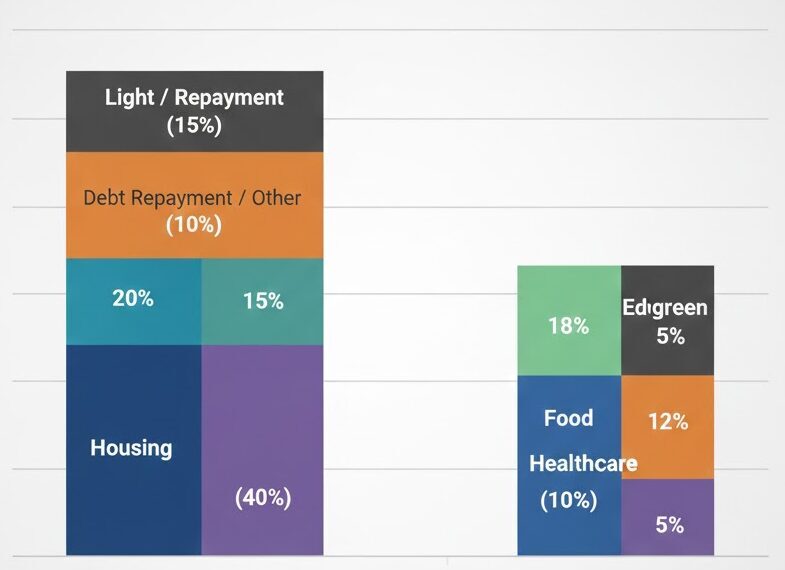
While individual spending choices vary, early administrative reports show that families commonly use the $725 payments for essential expenses.
A typical participant household might apply the funds toward rent to avoid eviction, pay for childcare that allows a parent to maintain employment, or cover food and utility costs during periods of fluctuating income.
Program administrators emphasize that unrestricted cash often stabilizes finances rather than replacing earned income. In many cases, recipients continue working while using the payments to smooth monthly expenses.
Measuring Success: What the County Is Tracking
The pilot’s success will not be judged by anecdotes alone. Sacramento County has established a detailed evaluation framework that tracks multiple indicators over time.
Key metrics include:
- Housing stability, including eviction risk
- Food security and nutrition access
- Employment continuity and job changes
- Stress levels and mental well-being
- Child-related outcomes such as childcare consistency
Researchers will compare these outcomes against baseline data and against similar households not receiving payments. Officials say this evidence-based approach is essential before considering expansion.
Funding and Fiscal Considerations
The pilot is funded through a combination of state-allocated resources and local funds. Officials stress that the program operates within a fixed budget and does not draw from federal stimulus allocations.
Because the initiative is time-limited and relatively small, its fiscal impact is contained. Scaling such a program statewide or nationally would require significantly larger investments and legislative approval.
Economists caution that while pilots can demonstrate effectiveness, they do not automatically resolve questions about long-term funding or sustainability.
Addressing Common Criticisms
Does Guaranteed Income Discourage Work?
One of the most persistent criticisms is that guaranteed income may reduce motivation to work. However, pilot designers note that the $725 monthly amount is insufficient to replace full-time employment.
Instead, the payments are intended to stabilize households so adults can remain in the workforce. Early observations suggest most participants continue working, using the funds to manage unpredictable expenses.
Could It Drive Inflation?
Some critics argue that cash payments could fuel local inflation. Economists generally respond that the limited scale of pilots makes significant inflationary effects unlikely. Broad inflation trends are typically driven by macroeconomic forces rather than small, localized programs.
National Implications of a Local Experiment
Although Sacramento’s program is local, it carries national significance. Lawmakers, researchers, and advocacy groups across the country are closely watching the results.
Several other cities and counties have launched similar pilots in recent years, each testing different payment levels and eligibility rules. Together, these programs form a growing body of evidence that may influence future policy debates.
However, officials caution against misinterpreting local pilots as imminent nationwide programs. No federal law currently guarantees monthly payments of $725 or any similar amount to U.S. families.
Why Headlines Can Be Misleading
The phrase “$725 guaranteed income program” has circulated widely online, sometimes creating the impression of a new national benefit. In reality, the Sacramento pilot is geographically limited, time-bound, and selective.
Policy experts emphasize the importance of distinguishing between experimental pilots and permanent social programs. Misunderstanding this difference can lead to confusion about eligibility and expectations.
County officials say transparency remains essential to maintaining public trust and avoiding misinformation.
What Happens When the Pilot Ends
The current payment cycle will conclude after 12 months. At that point, researchers will compile findings and present them to county and state officials.
Possible outcomes include:
- Discontinuation of the program
- Extension for further study
- Expansion to additional households
- Integration of findings into broader policy reforms
No decision has been made in advance. Officials say outcomes will guide next steps.
Looking Ahead
Sacramento’s $725 guaranteed income pilot represents a cautious yet ambitious attempt to rethink how public policy supports families during early childhood. Its limited scope reflects fiscal realism, while its design reflects growing interest in evidence-based innovation.
As results emerge, they are likely to shape debates well beyond California. Whether guaranteed income becomes a larger feature of American social policy will depend less on headlines and more on what the data ultimately show.